// Akram Tissi.CASE STUDY:
Noor Studio.
A Marrakech furniture house, built to be read at arm’s length on a phone.
THE BRIEF
A furniture house in Marrakech, drawn from the brief up: six pieces in walnut, palm fibre and terracotta velvet, made to order, twelve weeks out.
A showroom like that sells on light and patience, and a phone offers neither. So the brand had to carry four o’clock in the afternoon around with it, wherever somebody happened to open it.
- ROLE
- Concept, art direction & layout
- ENGAGEMENT
- Self-initiated · Concept
Light changeseverything.
THE DECISION · CATALOGUE VOL. 01
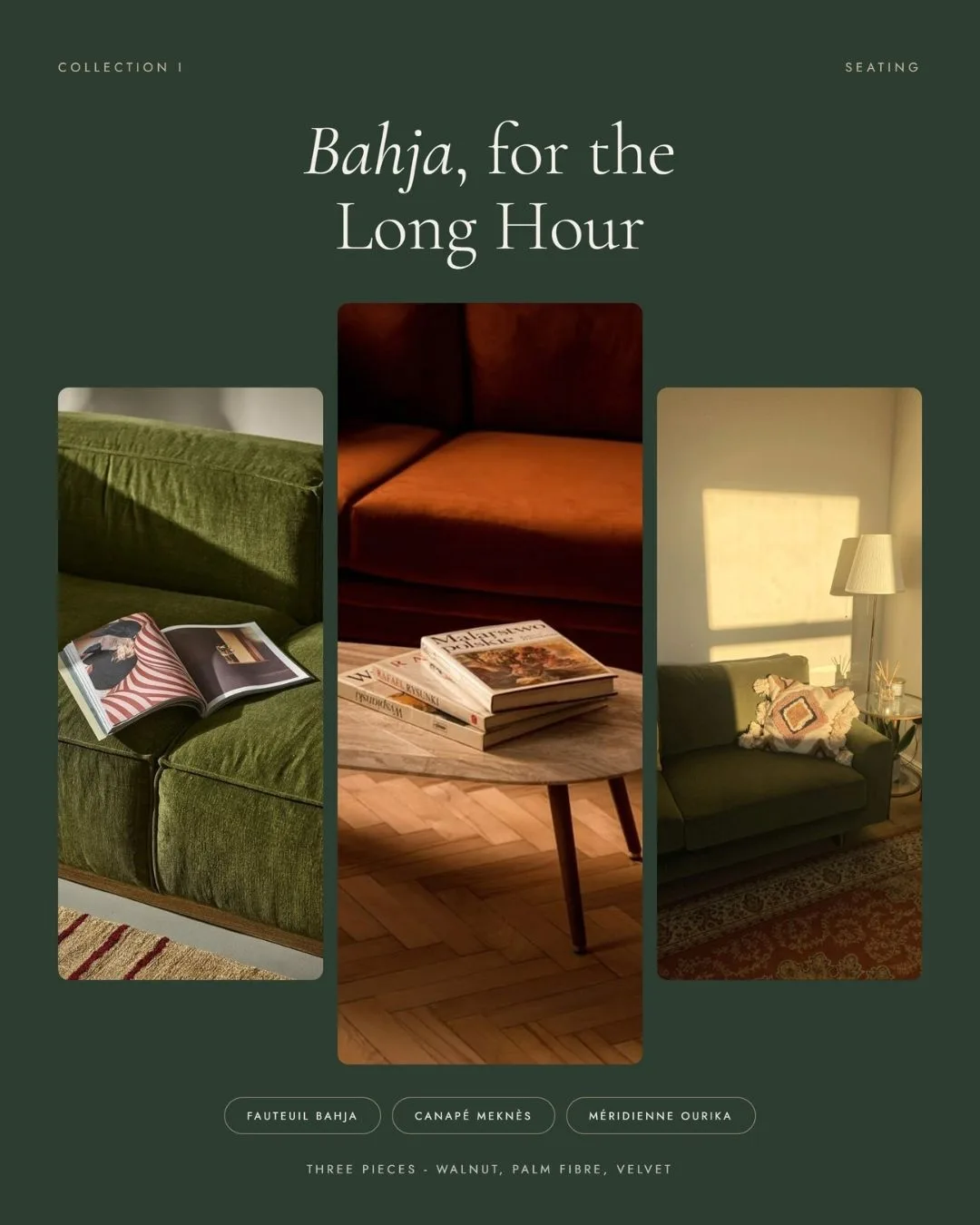
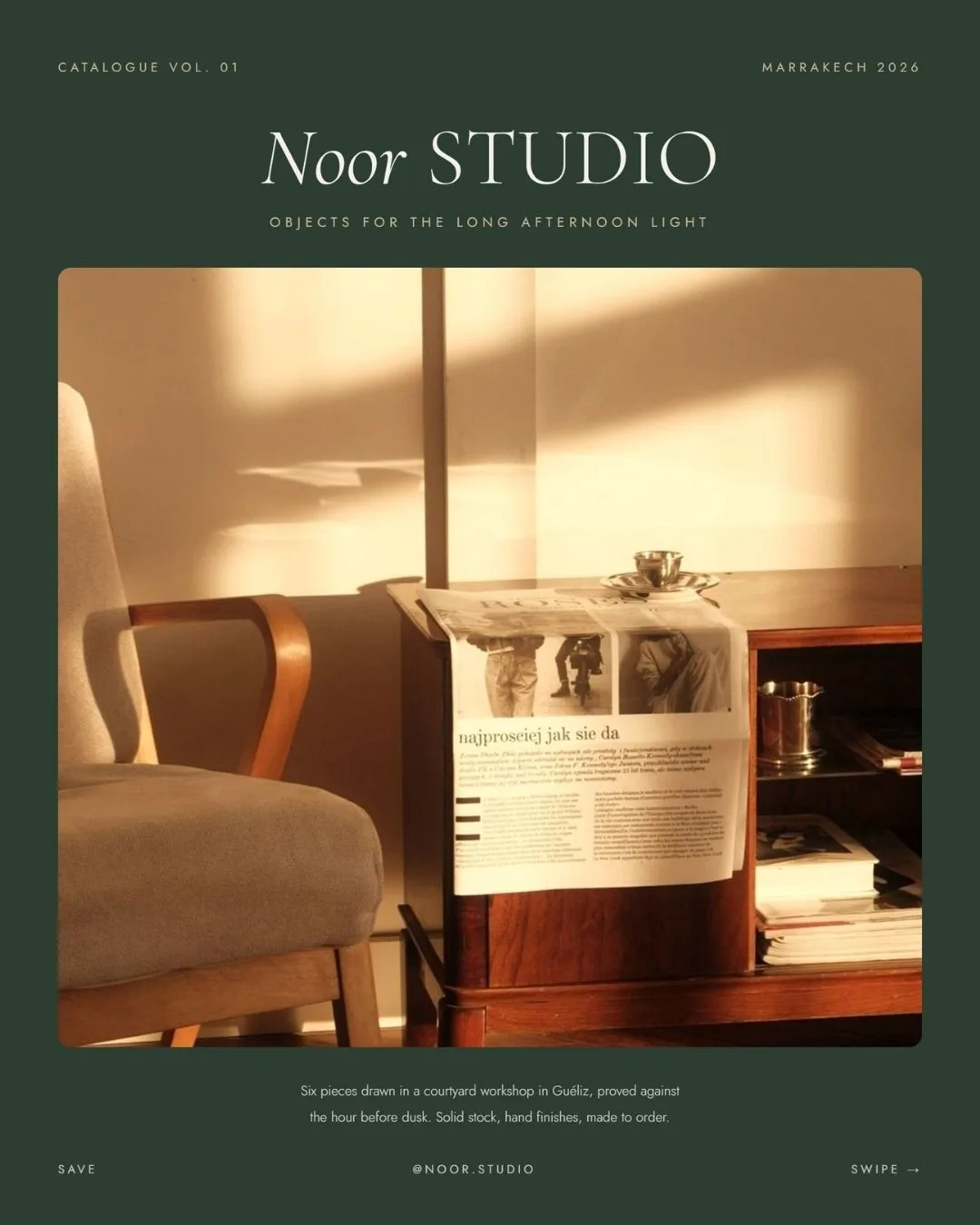
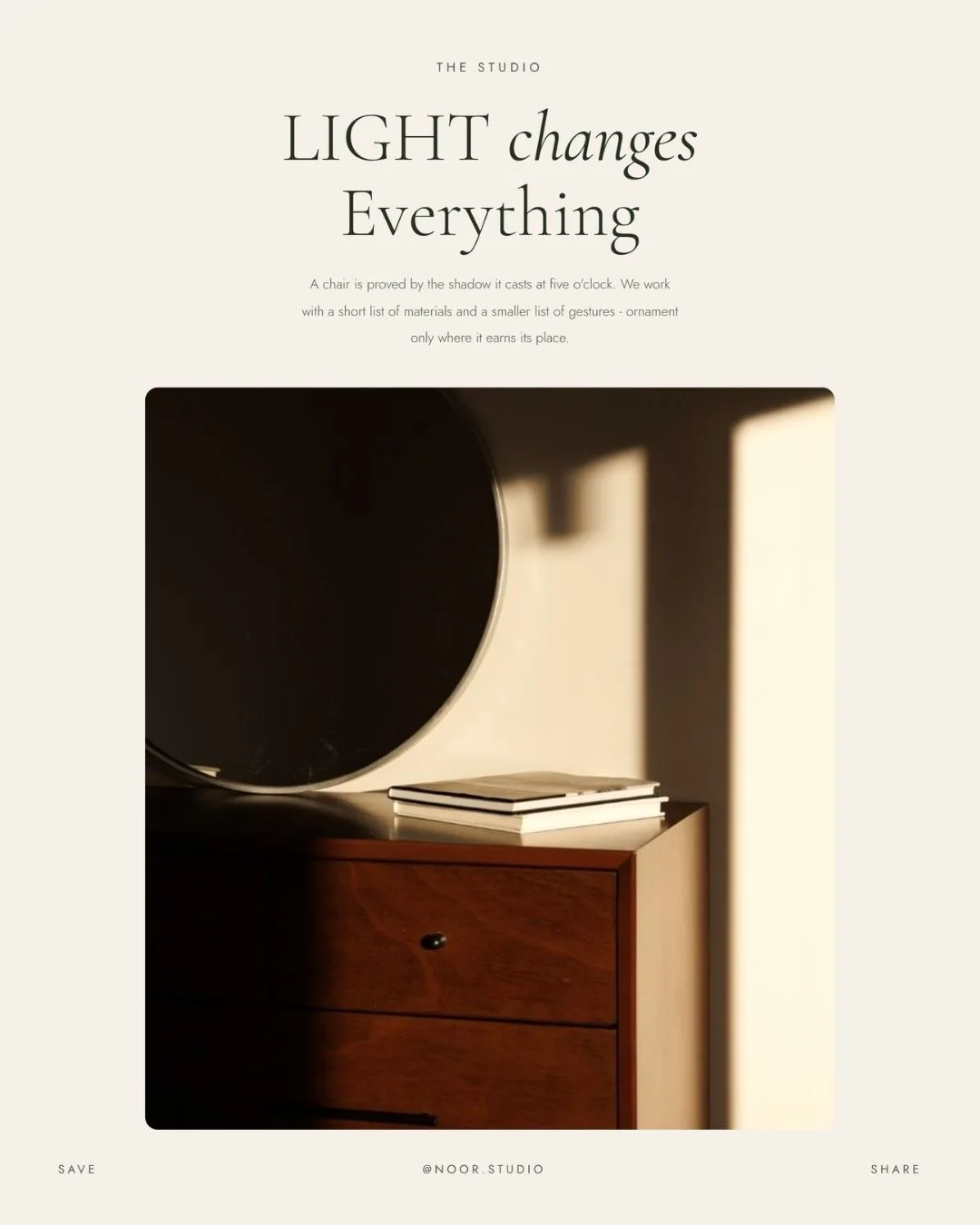
Eight slides that behave like a printed catalogue.
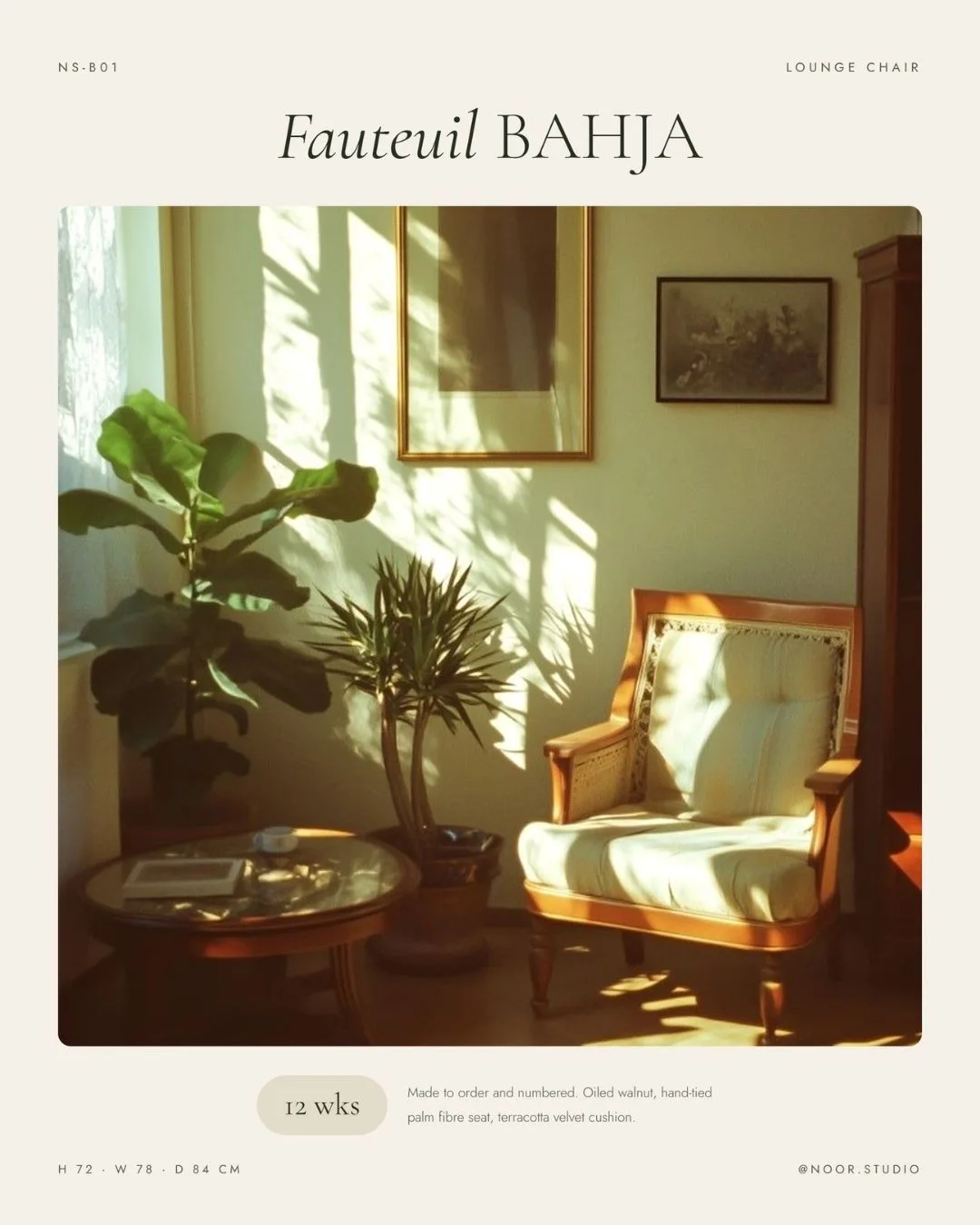
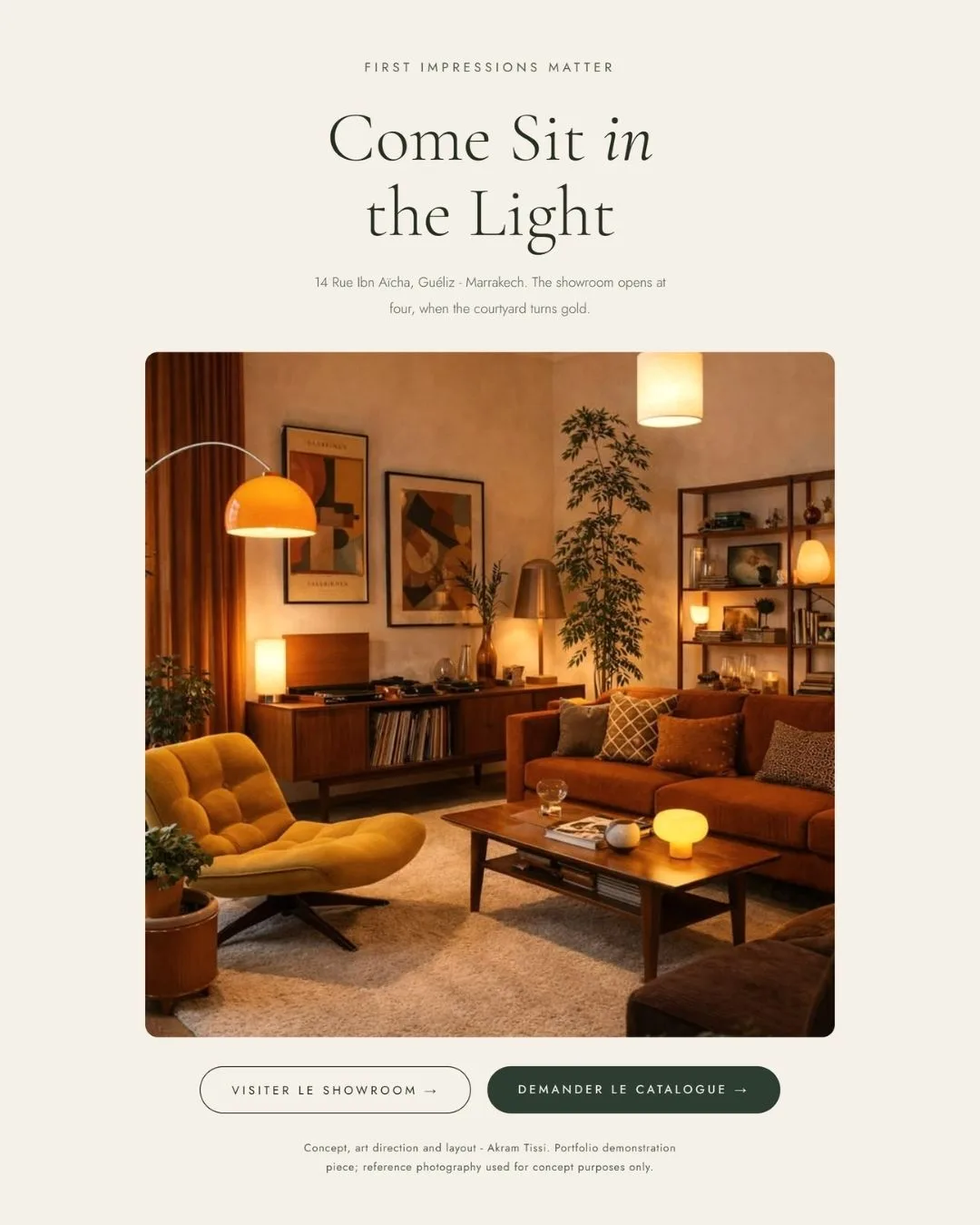
The carousel is the storefront. It opens on a chair in four-o’clock light and closes on an address.
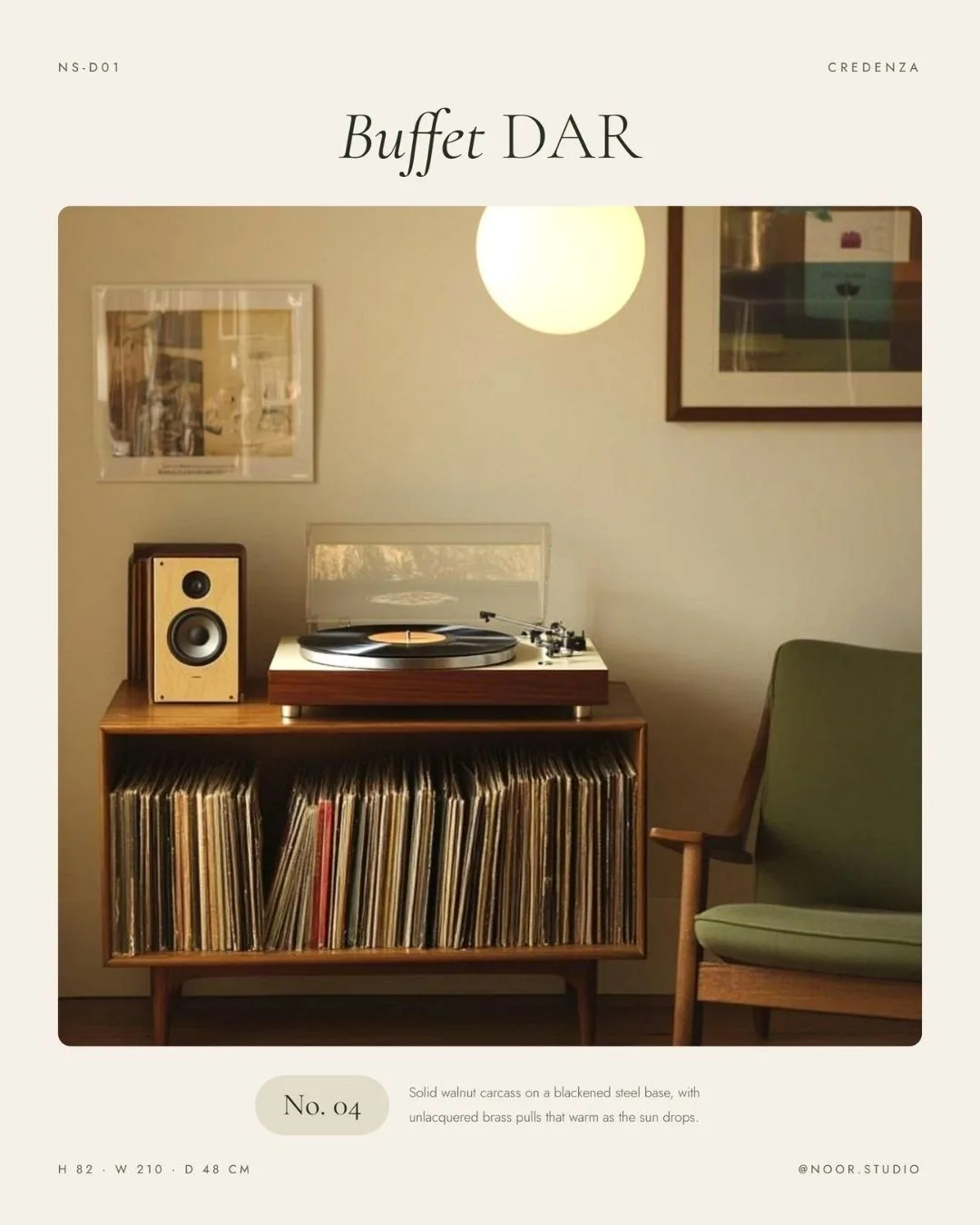
Deep forest green for the collection pages, bone for the pages that make the case. Titles in a high-contrast serif with the italic on the second word, so the eye finishes each line on a lean. Every piece carries a reference: NS-B01, NS-D01. Catalogue numbers imply a catalogue, and a catalogue implies somebody who has been doing this a while.
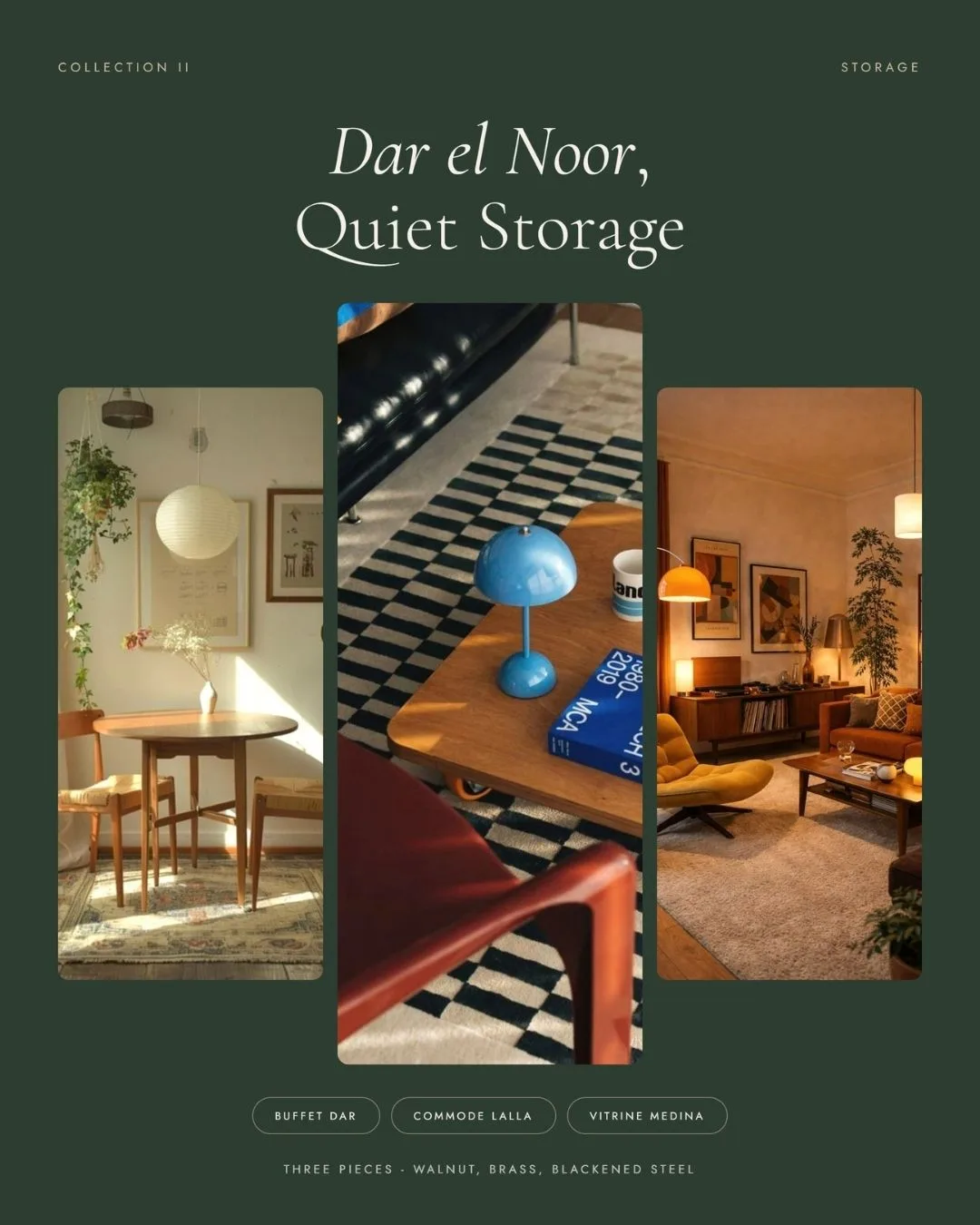
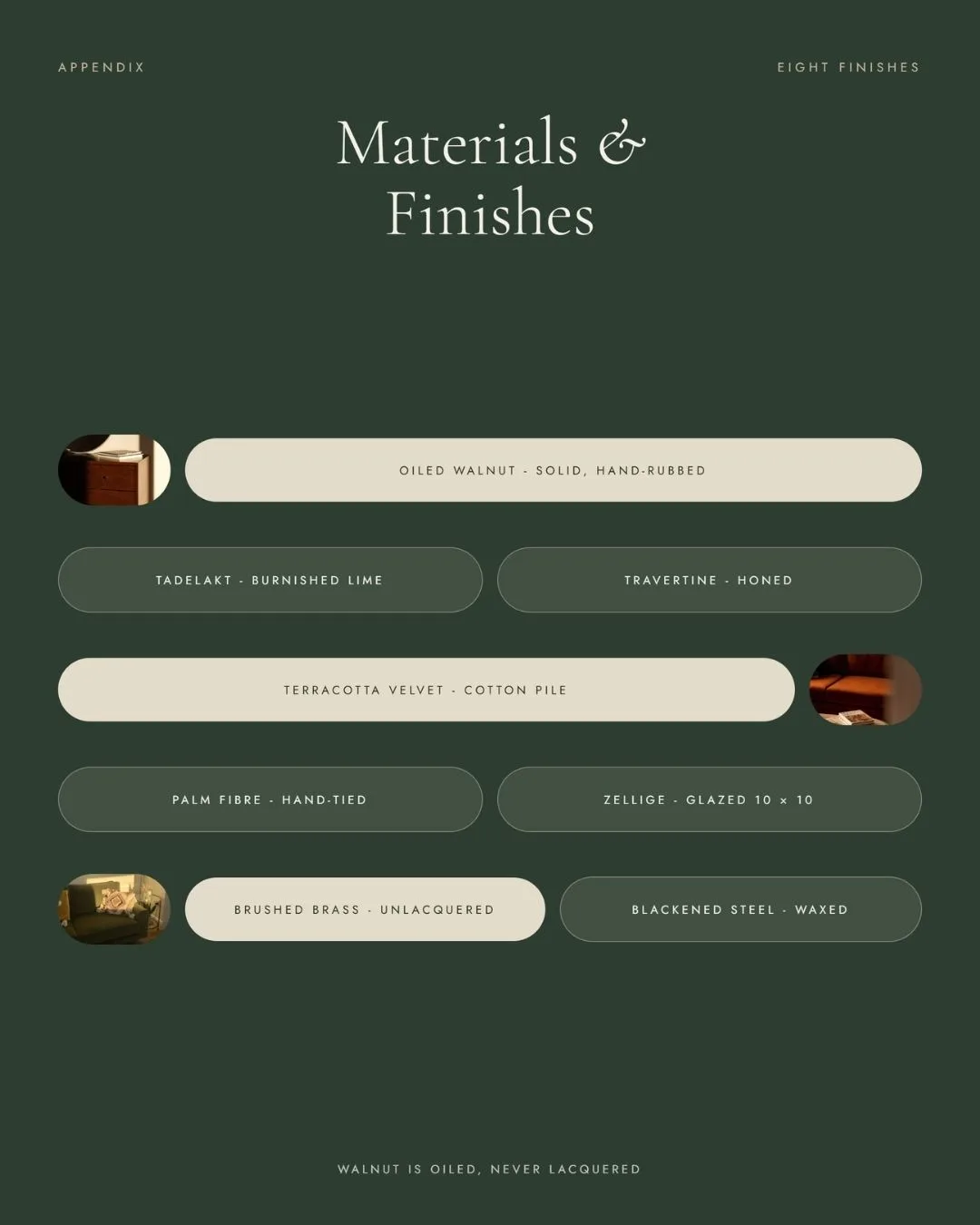
Two collections. Seating: Bahja, Mernès, Oudia. Storage: Dar, Lalla, Medina. Then the page most furniture brands leave out: eight finishes, named and specified. Walnut is oiled, never lacquered. Say the rule plainly and the rule does the selling for you.
IN PRINT · CATALOGUE VOL. 01
The same house, eight pages on paper.
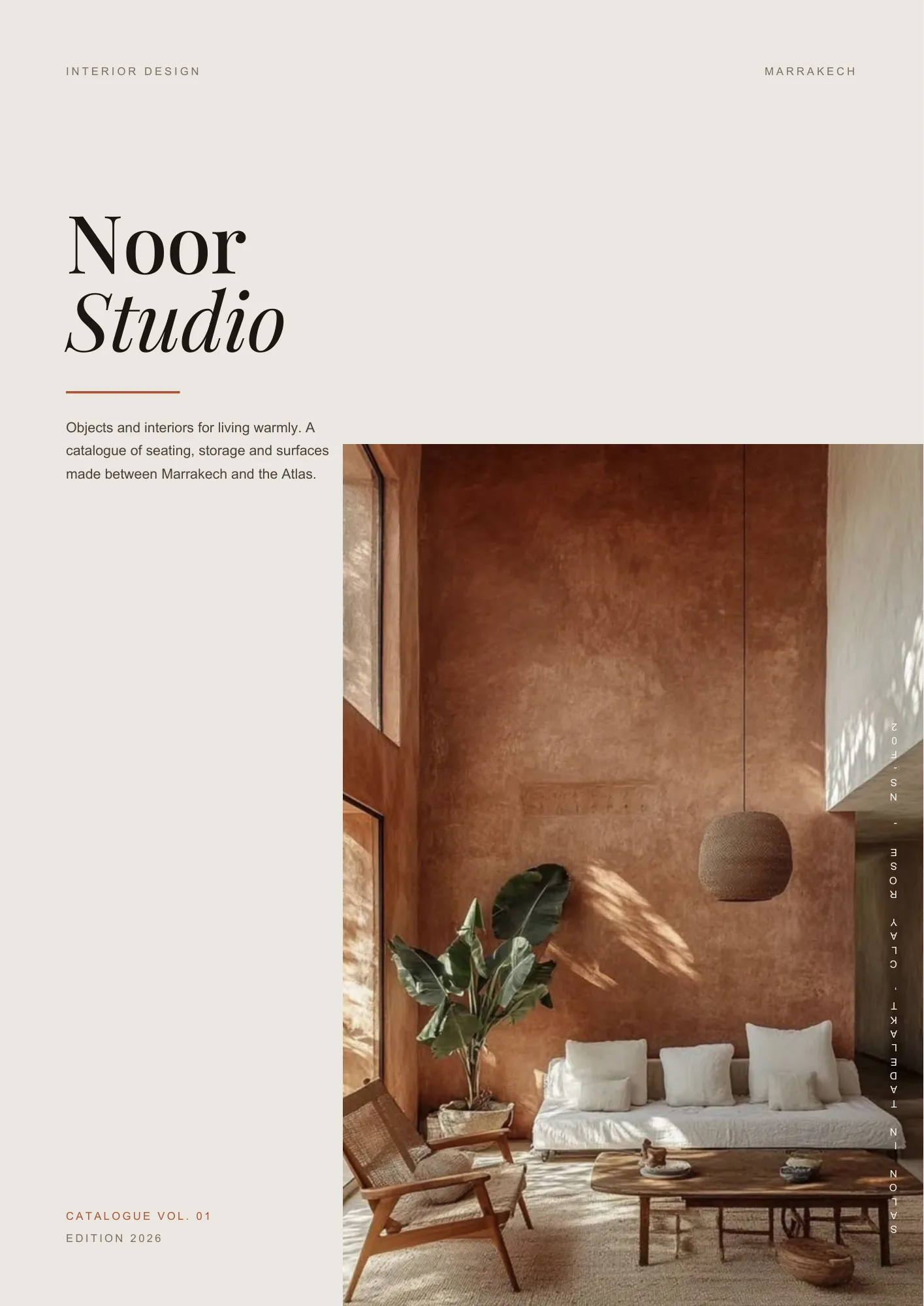
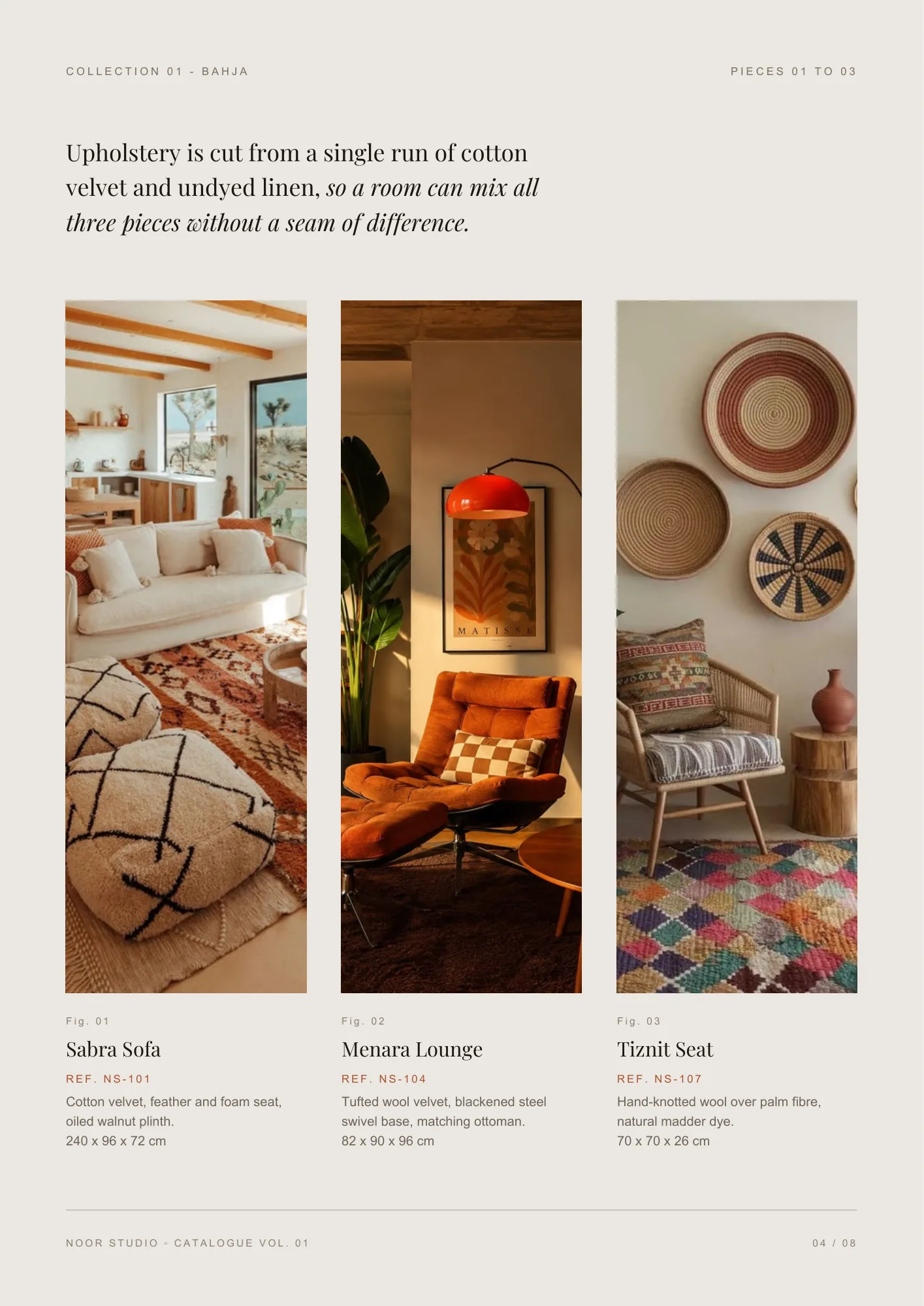
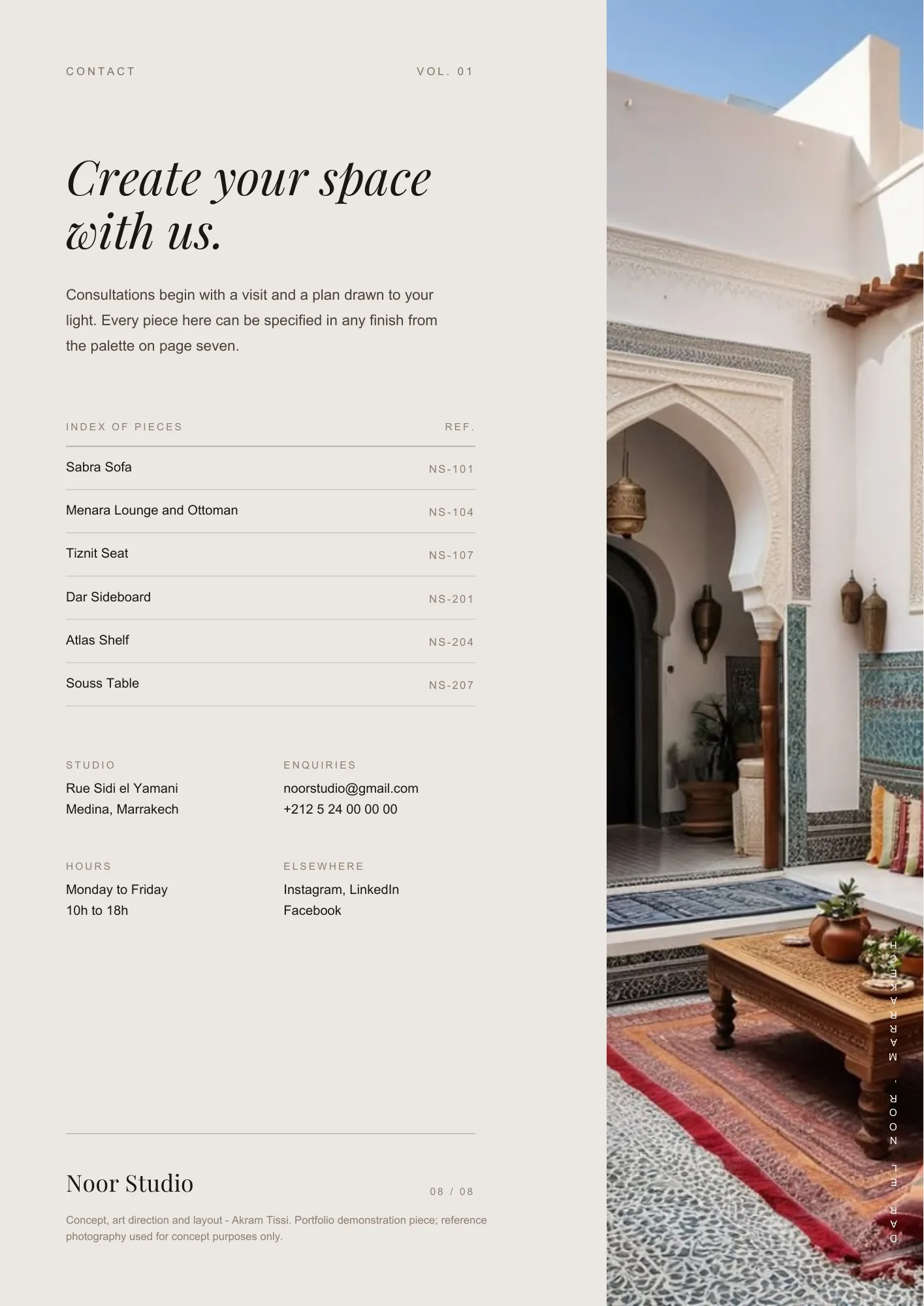
The carousel sells on a phone. The printed catalogue is the one that stays on a desk: eight A4 pages, Edition 2026, from the cover to the address.
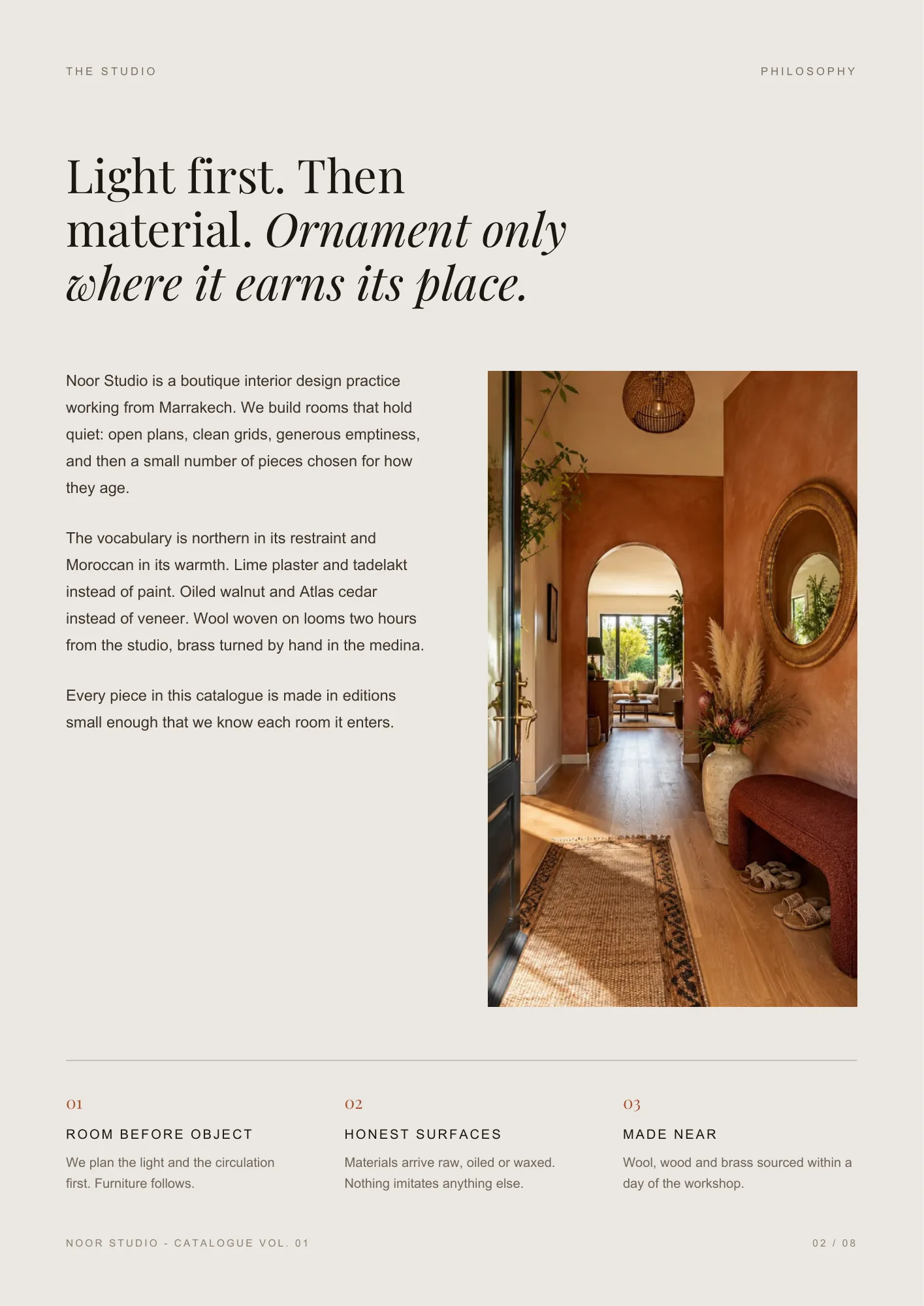
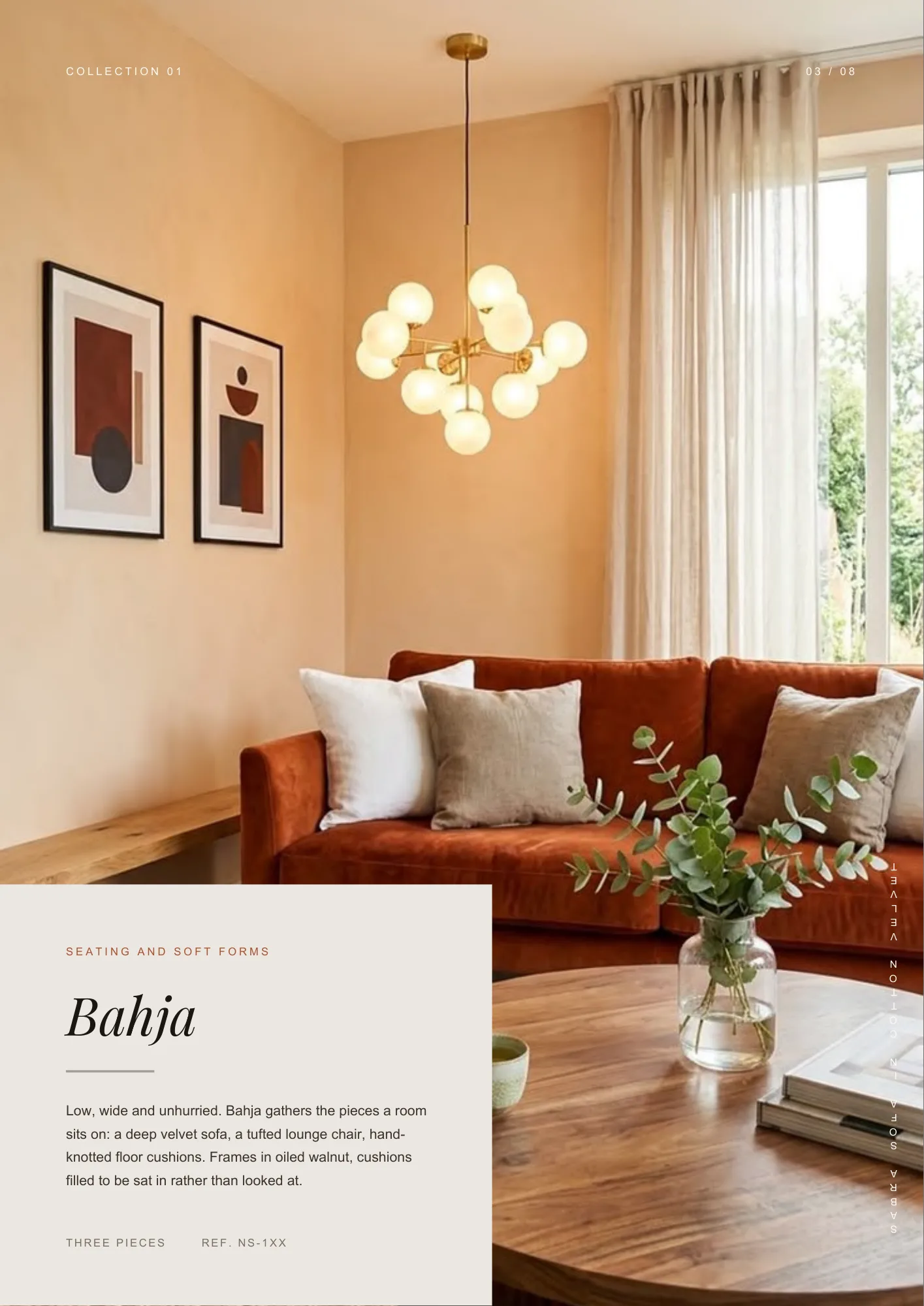
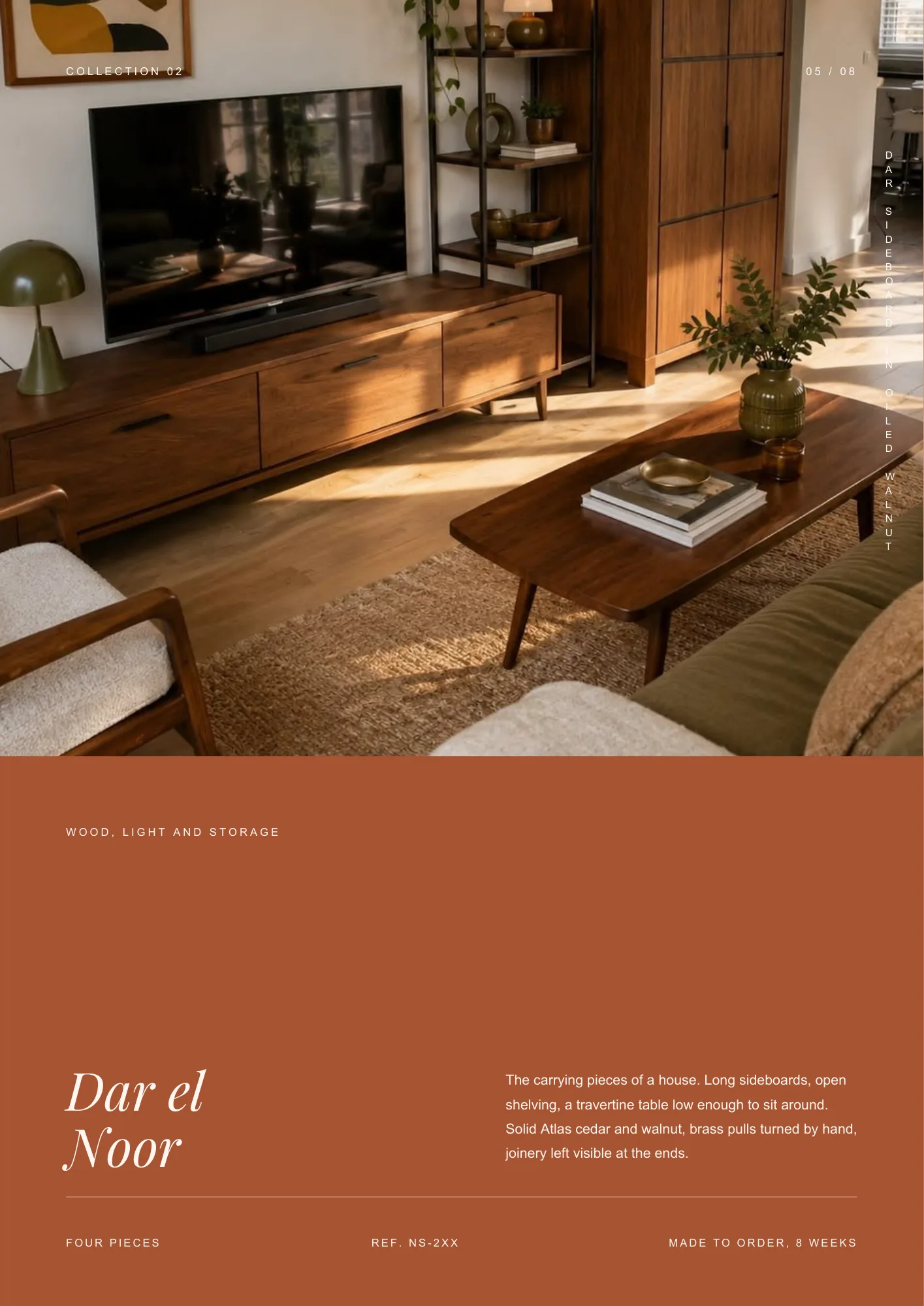
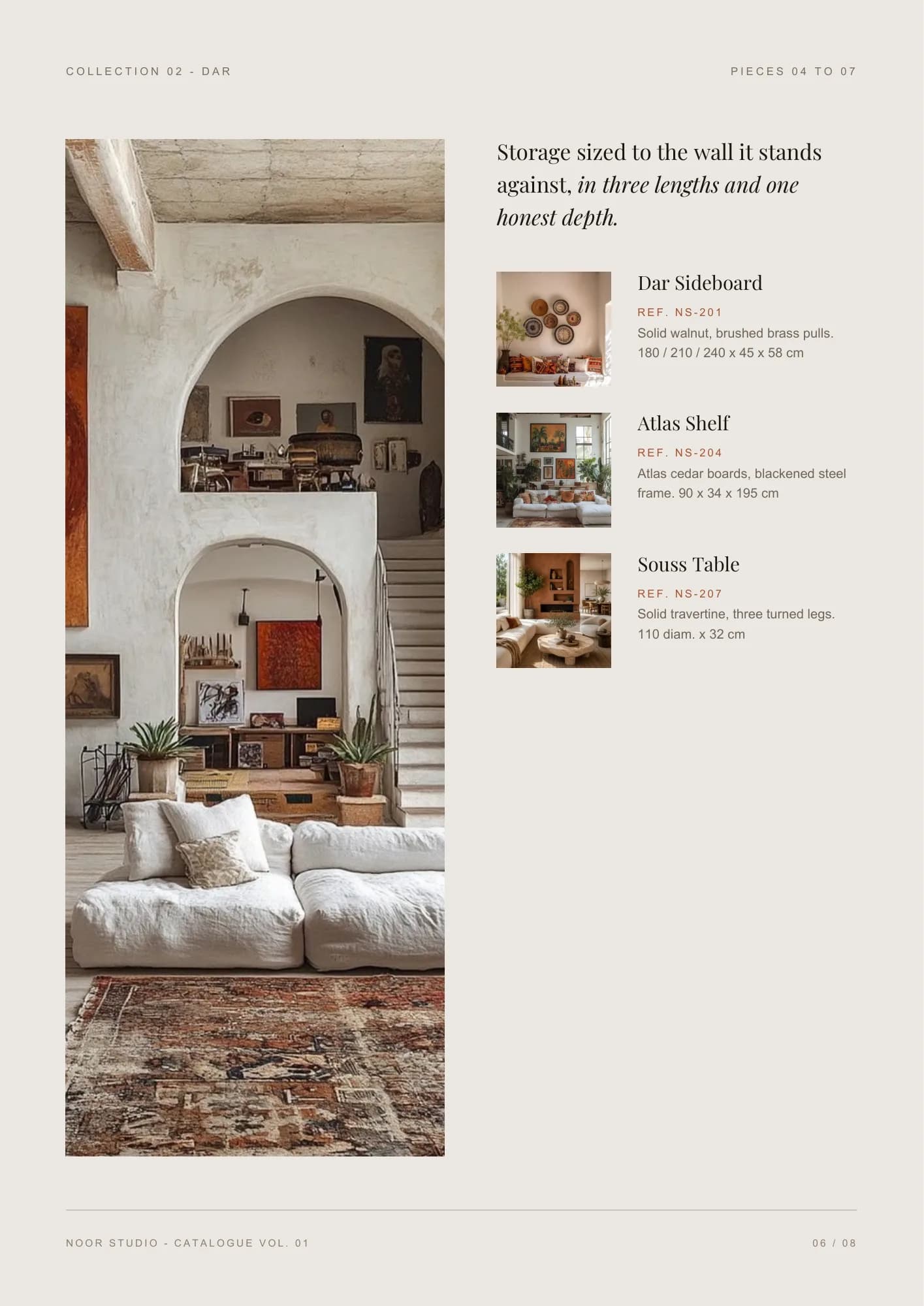
It is ordered like an argument. The philosophy comes before a single chair: light first, then material, ornament only where it earns its place. Each collection opens on one room and closes on its pieces, Bahja for seating and Dar el Noor for storage, every piece numbered from NS-101 to NS-207 with its materials and its dimensions.
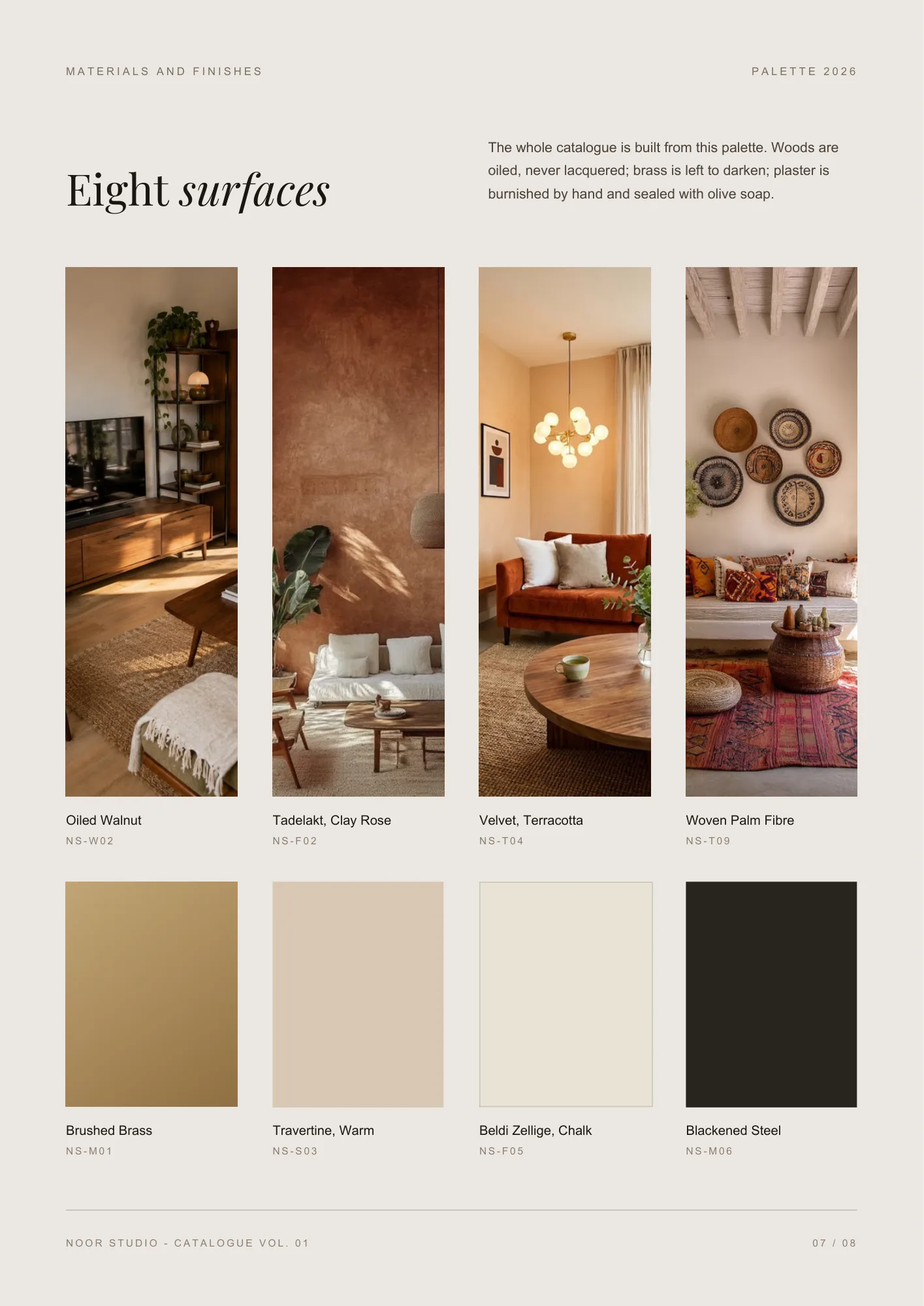
Then the page most catalogues leave out, the eight surfaces the whole range is built from, and on the back an index of every piece, so a client can order by reference.
THE SYSTEM
A reference number is a promise.
Every piece carries a code and a finish: NS-B01, oiled walnut, palm fibre, terracotta velvet, twelve weeks. Eight finishes named and specified on their own page, where most furniture brands leave a blank.
That page is the system. A new chair needs a photograph, a name and a code, and it belongs to the same house as the first six. Walnut is oiled, never lacquered, and the rule does the selling without anybody having to argue it.
IN USE · THE SITE
One page. One thing to do.
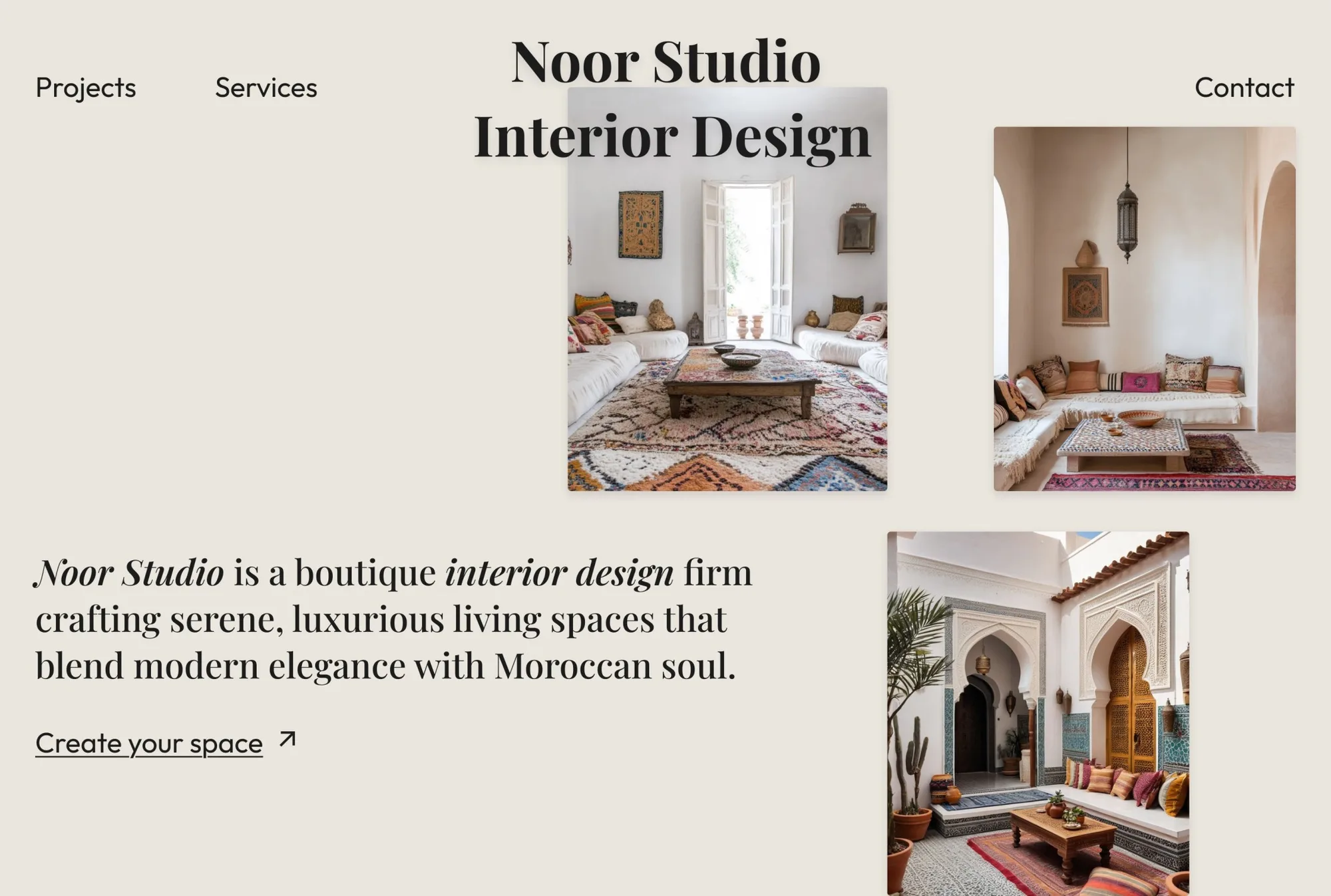
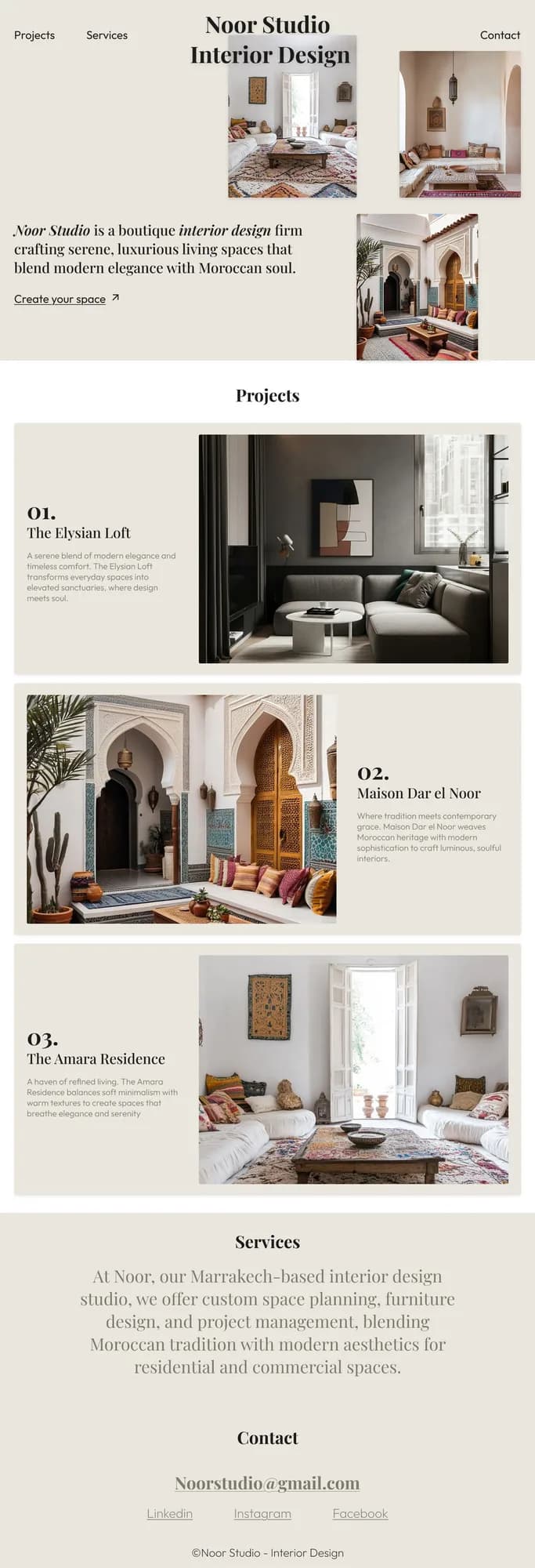
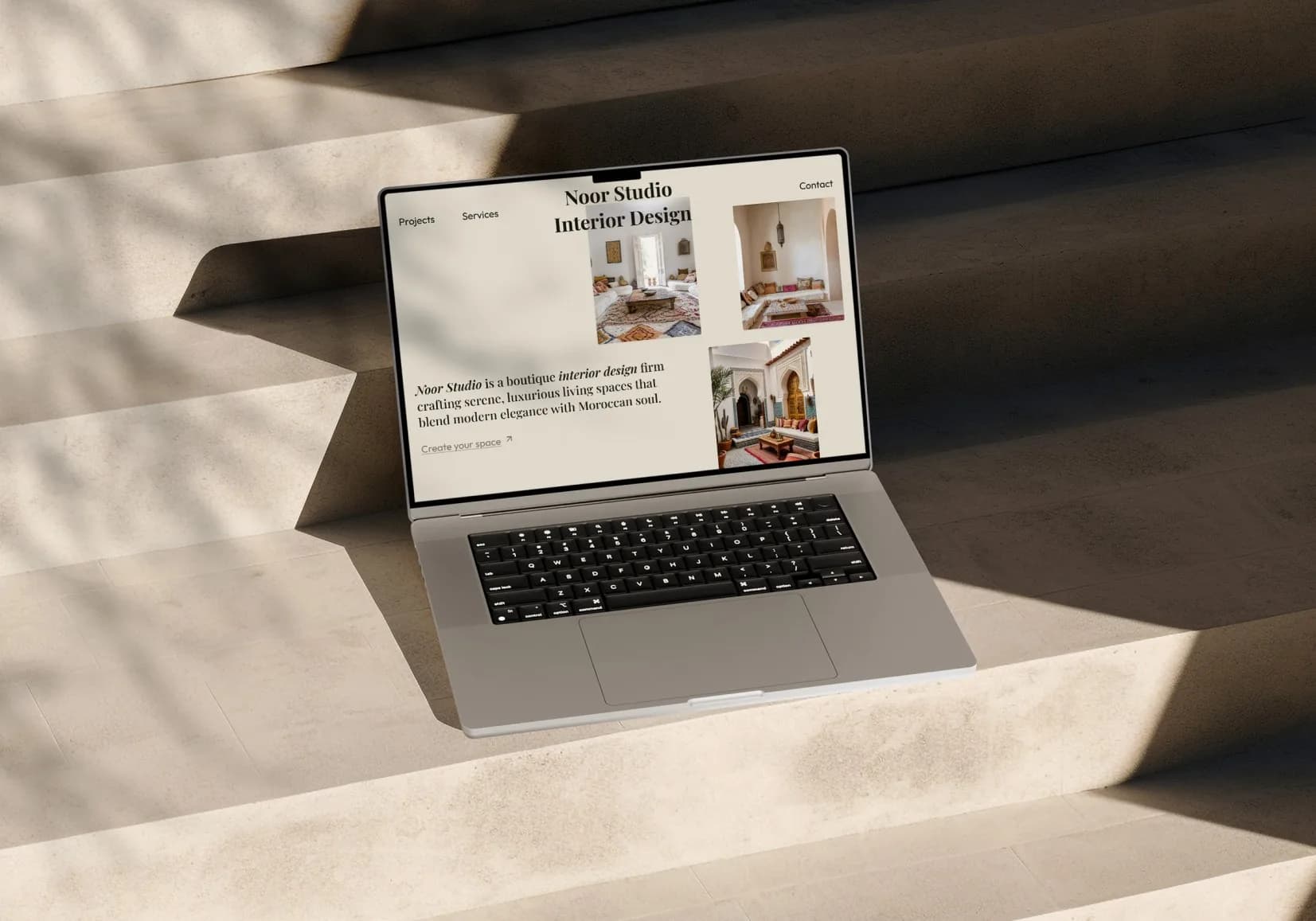
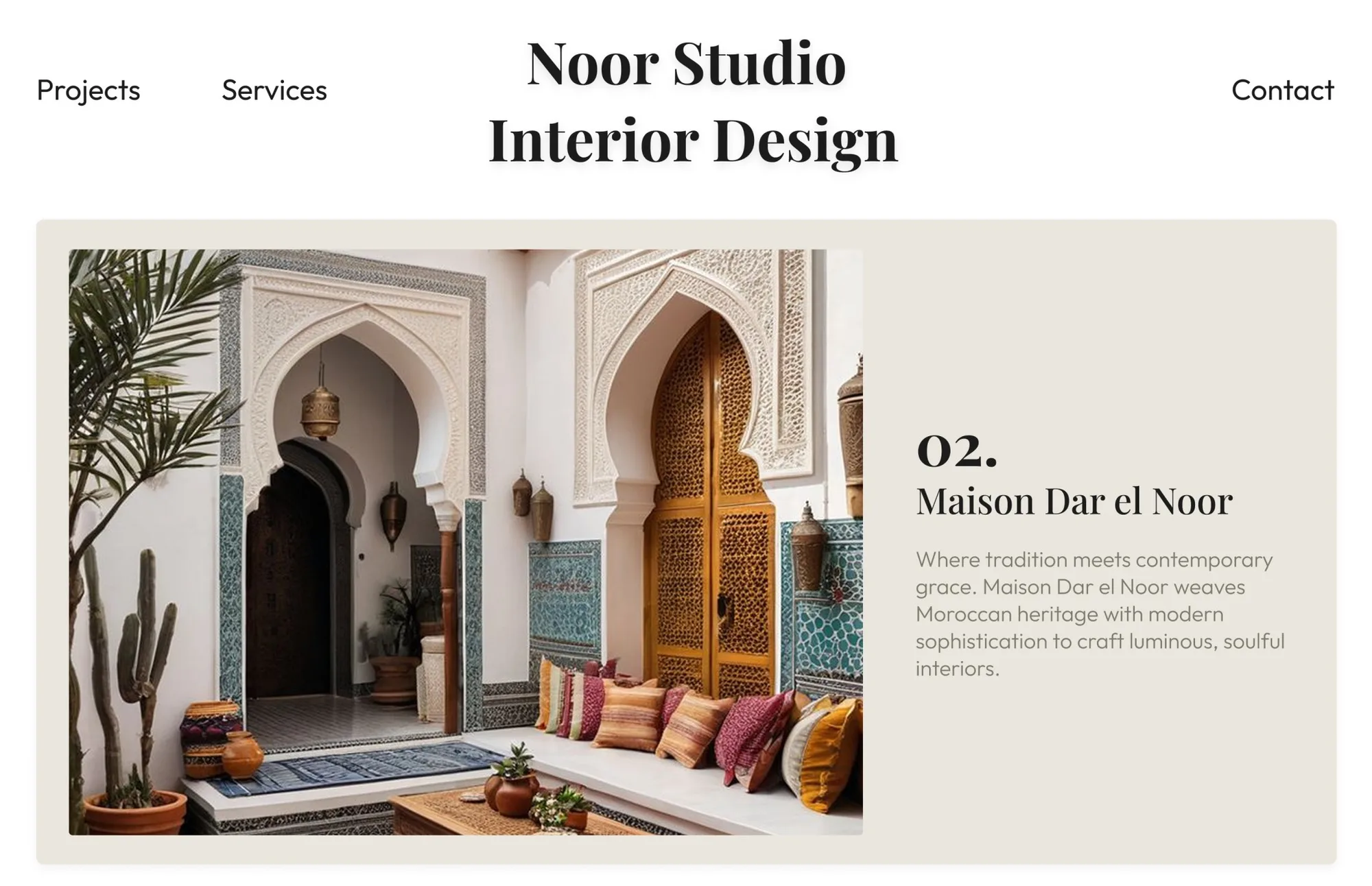
An interior practice needs three things on a landing page: proof, scope, and an easy way to start the conversation. The rest is a brochure.
Serif masthead, an asymmetric cluster of photographs, and one underlined link that reads Create your space. The projects sit below in a numbered column, so the page reads as finished work rather than a menu of ambitions.
IN USE · PROJECT PAGE
Maison Dar el Noor.
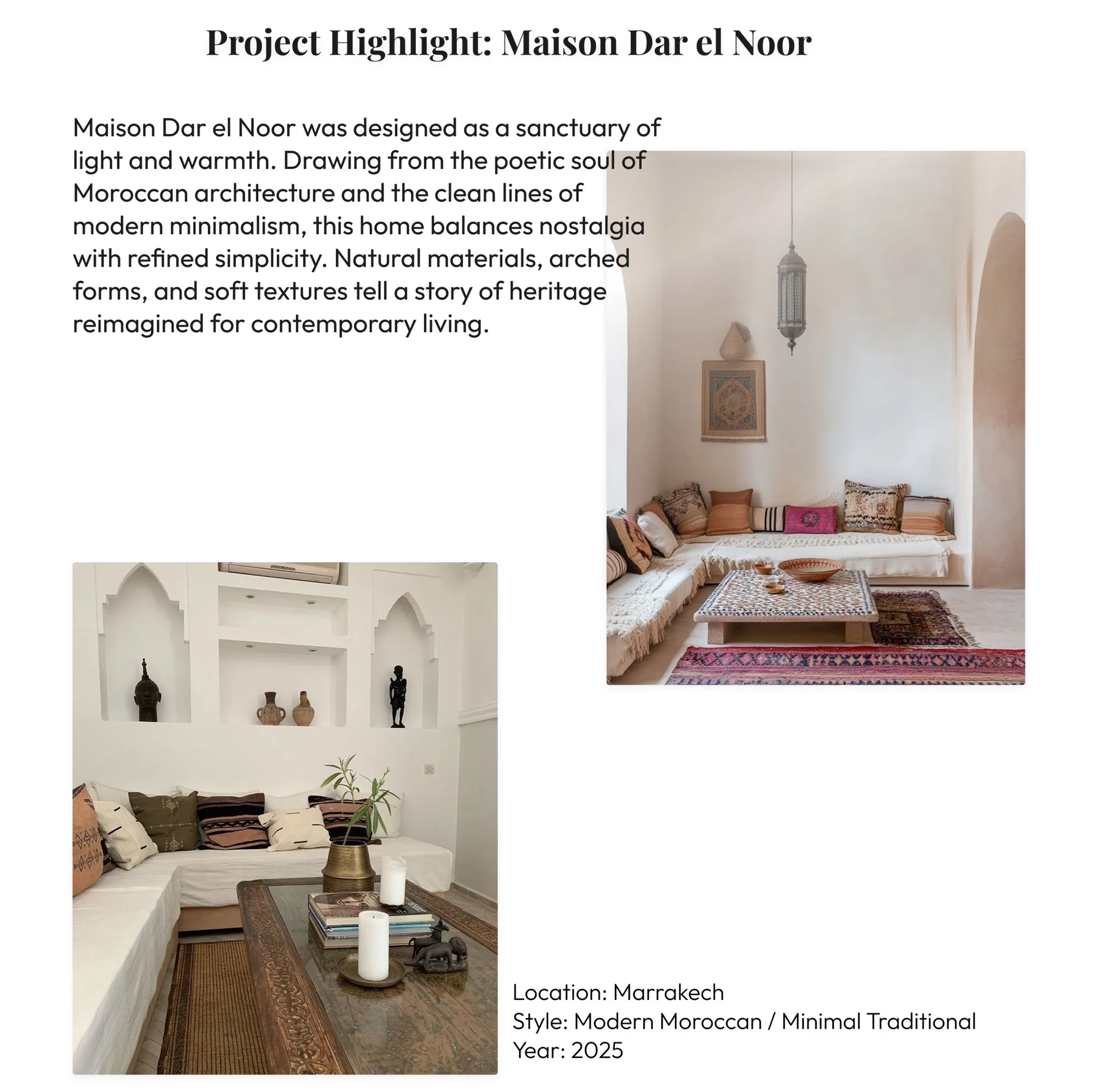
The case-study template, tried on one project first. A headline, a paragraph that commits to a point of view, and photographs given enough room to count as evidence.
Location, style and year sit out in the margin, where a reader checks rather than reads.
Posters